

Guest Columns
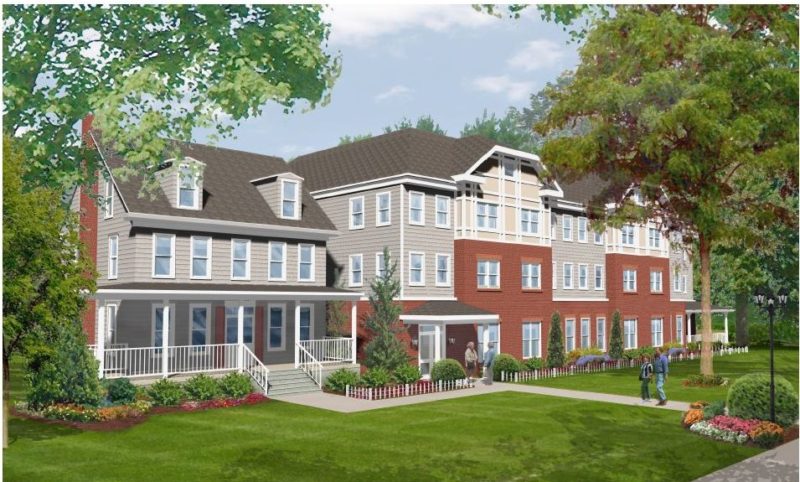
Addressing affordable housing: Government leaders must adapt
After multiple Supreme Court decisions over 50 years, the creation of the Council on Affordable Housing and its subsequent power stripping by the Supreme Court in 2015, over 60,000 units of affordable housing have been created. So, does that mean that the battle over affordable housing in New Jersey is over? Nothing could be further from the truth.

How to read an insurance certificate
By Paul V. Profeta We all have work done on our buildings. Many of us require that the Contractor provide proof of insurance in order to protect us from any liability that could occur due to their negligence or imperfections in their work. Often, we are handed an...

Rent control is not a solution to our affordable housing crisis
Among the many issues facing our nation, the availability of affordable housing, or lack thereof, is a problem that lawmakers have been trying to address for decades. Federal programs that either support the development of affordable housing or provide assistance to renters through vouchers have been woefully underfunded, and state and local elected officials are looking for solutions. Unfortunately, some have turned to rent control as an answer. But the reality is that rent control will not only fail to solve our affordable housing crisis, it will actually make it worse.
The next chapter in affordable housing in New Jersey
Since 2015, more than 280 towns in New Jersey have signed settlement agreements for their affordable housing obligations, while a judge has determined the statewide need to be about 155,000 units and experts project that about 50,000 of those will be created by 2025. Frankly, the court process is way too far down the road to try and move it back to the Council on Affordable Housing or another state agency. But that is not to say there are not some issues worth discussing as we move forward.

The changing landscape of stormwater management: New rule will require innovative techniques
On Dec. 3, the New Jersey Department of Environmental Protection published amendments to the state’s Stormwater Management Rule (NJAC 7.8) that, when adopted, will change fundamentally the way stormwater management systems are designed in New Jersey. The key amendment will replace the existing requirement, which asks developers to incorporate so-called non-structural strategies “to the maximum extent practicable,” with a firm requirement to use a technique known as green infrastructure in new development.