
The Jersey City skyline
By Joshua Burd
The historic but long-vacant St. John’s Episcopal Church in Jersey City is finding new life under a plan to bring 82 apartments to the site — including 11 affordable units — through a mix of ground-up construction and the restoration of the Summit Avenue landmark.
Its developer, Ben LoPiccolo, said the project is only possible with funding support from the city. And it’s exactly the type of partnership that he feels is key to solving its housing crisis.

“Moving forward, that’s the kind of balance that we need to strike with the city — to really find a place where we could meet in between, where we can make the numbers work,” said LoPiccolo, CEO and founder of BLDG-UP. “We want to create affordable housing. We want to create as much housing as possible, but there are going to be some needs on our side in order to make our pro formas work and for the projects to pencil out — whether they’re subsidies or tax abatements or expedited permitting to just make it easier to build in Jersey City.
“Whatever it takes, it’s extremely important to keep up with demand,” he added, “because no matter how you look at it, if you don’t build enough housing, it’s just going to get more and more expensive.”
It’s a core belief for LoPiccolo — both as a developer and as board president of the Jersey City Apartment Owners Association — one that’s now central to their outreach to the city’s new mayor, James Solomon. The group has also been vocal in pitching itself as a resource, he said, noting that it can offer professional support and ground-level insights on everything from rental rates in individual neighborhoods to traffic and public safety.
Finding common ground may not be so simple, especially after Solomon railed against developers last year during his campaign to succeed longtime Mayor Steve Fulop, part of a strategy that focused largely on improving affordability for longtime residents. That’s not to mention the $255 million budget deficit that Solomon highlighted soon after taking office in mid-January, a crisis that’s likely to dominate city politics for months to come.
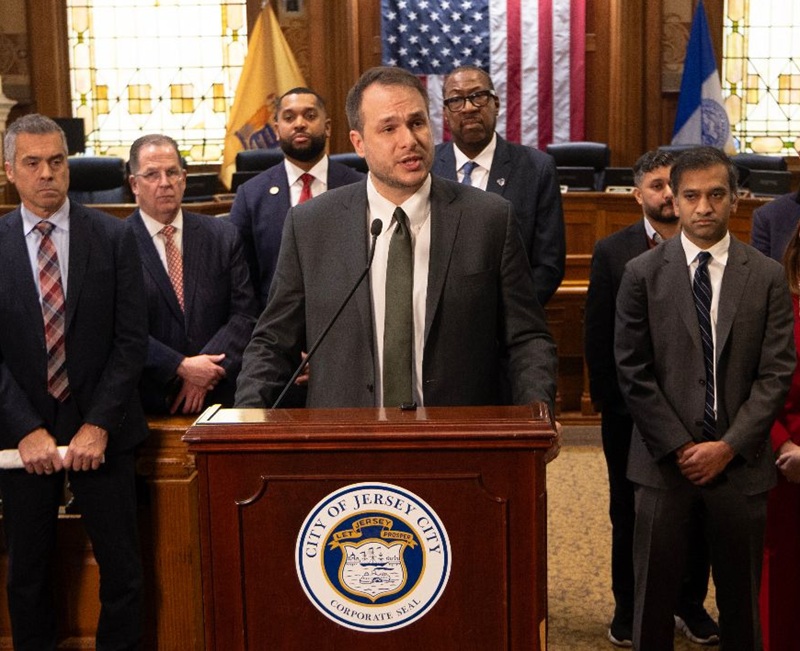
Still, the Jersey City Apartment Owners Association feels it’s part of the solution.
“The JCAOA is eager to collaborate with Mayor Solomon to drive more investment in Jersey City to help the city grow and solve its budget shortfall,” said Wendy Paul, the group’s executive director. “A welcoming investment climate means adding supply to meet the demand for more housing and stabilizing housing prices. In turn, this will generate more tax revenue and support additional community amenities benefiting the whole of Jersey City.”

Founded in 2021, JCAOA spent its initial years addressing challenges stemming from the pandemic, from the rent freeze on many of the city’s apartment buildings in 2020 to slowdowns in permitting and rising construction and labor costs, Paul said. It had a more public launch about two years later, with a broader mission of protecting property rights, advocating for fair and balanced housing policies and providing resources and education to property owners, managers and housing providers.
Its leaders — which also include executives from LeFrak, Veris Residential Inc., Dvora, Cara Squared and Gotham West — watched intently during a mayoral campaign in which landlords were squarely in the crosshairs. That included Solomon’s calls to make developers pay their fair share and mandate that all major new projects include at least 20 percent affordable housing, as well as cracking down on alleged pay-to-play tax abatements capping rent increases.
Yet LoPiccolo believes much of that ire was meant for “a few bad actors” in and around Jersey City, though he declined to be specific. Most developers and landlords “do good things in the community,” he said, serving as the type of stakeholder that can lend a hand to a new administration.
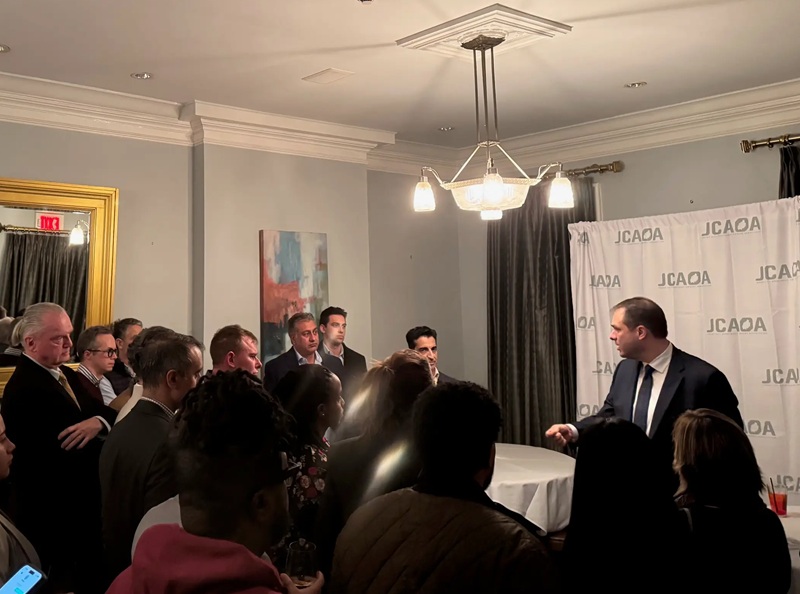
The JCAOA sought to make that clear in early February when it welcomed Solomon for a meet and greet with members. According to the organization, the gathering was positive and marked by a willingness to cooperate, echoing the group’s stance during mayoral transition.
“To me, it’s refreshing to just change administrations and get new blood in government,” LoPiccolo said in an interview in mid-December, later adding: “I believe it’s an opportunity for us to form a new relationship with a new government, a new mayor, new council people and help them to see where we can meet in the middle, because right now we are in the midst of dealing with a housing crisis, not just in Jersey City, but in America.”
He feels JCAOA is “up for the challenge” to help Solomon tackle the crisis, “but in a balanced way.”
The veteran builder, whose pipeline also includes a 70-unit project in Journal Square that broke ground last fall, sees a window of opportunity with interest rates ticking downward and construction costs stabilizing. In the meantime, he said JCAOA and the industry at large has “many, many resources” that it can contribute to broader public policy issues. The organization has floated the idea of helping City Hall fund a third-party expert focused on studying and improving traffic patterns and safety, he said, highlighting a concern that is all but universal among residents and businesses.
“It’s one of the biggest complaints,” LoPiccolo said. “We’d be very happy, though, to contribute to that study and be a part of it.
“And that’s just to open the door and really to send the signal to the city that we are your partner, we want to work with you to make Jersey City a better place — because, at the end of the day, what are we working for? We want to work in a great environment. We want to be happy with what we’re doing. We’re professionals, and when we get up to go to work every day, whether you’re in government or you’re building real estate, you want to love what you’re doing.”
Ripple effects
The race to become Jersey City’s next mayor was undeniably contentious when it came to then-Councilman James Solomon’s stance on developers. Wendy Paul knows that well, noting that the “the temperature just continued to rise” amid calls to make housing more affordable while placing the blame on landlords.
Moving past the campaign means working together to not only expand the housing stock but expand employment opportunities, she said.
“This housing crisis needs to be front and center for all of us, not just the builders, not just the new administration, but from a job creation perspective and an economic development perspective,” said Paul, executive director of the Jersey City Apartment Owners Association, “because there are a lot of jobs that are waiting in the wings once we partner and continue to do this work that we’ll be able to contribute to not just getting more units online, which is the number one priority, but to provide opportunities for other jobs — from the trades to the local restaurant that is on the ground floor of a retail space of a building.”