
By Joshua Burd
A sweeping expansion of New Jersey’s community solar program is set to begin, allowing for a new wave of clean energy projects that benefit both residents and commercial landlords.
The state’s Board of Public Utilities on Wednesday voted to allocate another 3,000 megawatts to the initiative, implementing a 2025 law signed by former Gov. Phil Murphy, with registration set to begin March 6. That would roughly quadruple the capacity that’s already online or in the pipeline under the permanent program launched in late 2023, which has allowed warehouse owners across the state to lease their rooftops to solar developers.
The solar firms, in turn, sell energy directly to the grid rather than the building below, enabling utility companies to give bill credits to nearby residential customers.

“It is a great program at a time when residents are experiencing very high electric bills and energy bills,” BPU President Christine Guhl-Sadovy said during the agency’s board meeting this week. “We encourage everyone to subscribe to community solar and lower your bill. And it’s just another opportunity that is coming out of the BPU for people to lower their energy bills.”
Launched as a pilot in 2019, the state’s Community Solar Energy Program became permanent in 2023. The BPU has since authorized multiple capacity blocks totaling 750 megawatts, a figure that equates to tens of millions of square feet of rooftop space on warehouses.
The policy is now being supercharged after Gov. Mikie Sherrill, who took office in mid-January, signed an executive order directing BPU to implement the 3,000-megawatt expansion within 45 days. With registration set to begin, solar developers are now lining up to participate and likely bring panels to hundreds of additional commercial properties.
“The opening of the (three-gigawatt) expansion of New Jersey’s Community Solar Program marks a historic milestone for the state’s energy affordability,” said Solar Landscape CEO Shaun Keegan, whose Asbury Park-based firm is the state’s largest builder of community solar. “With this expansion, New Jersey has solidified its position as a national leader in community solar, delivering meaningful energy savings to residents while creating new opportunities for commercial property owners.

“We congratulate Governor Sherrill and the New Jersey Board of Public Utilities for prioritizing community solar and advancing a framework that enables the program to scale. As the leading provider of commercial rooftop solar in the state, Solar Landscape stands ready to partner with property owners, communities and utilities to deliver projects that create jobs and provide affordable power to the grid.”
Notably, BPU will accept projects registering under the newest allocation on first ready, first served basis. The agency is also reserving 300 of the new 3,000-megawatt capacity block for installations on landfills, noting that commenters have asked for a diversity of community solar project types and asked that landfill redevelopment, which may involve greater costs and timelines for permitting, site remediation and construction, be maintained as an option.
The state is allocating the remaining capacity among the state’s four utilities, based on their retail electric sales, as follows:
- PSE&G: 1,555 megawatts
- JCP&L: 778 megawatts
- Atlantic City Electric: 324 megawatts
- Rockland Electric Co.: 45 megawatts
Capacity blocks will roll over to successive energy years until the allocation for that market segment is fully subscribed or until Dec. 31, 2029, whichever comes first.
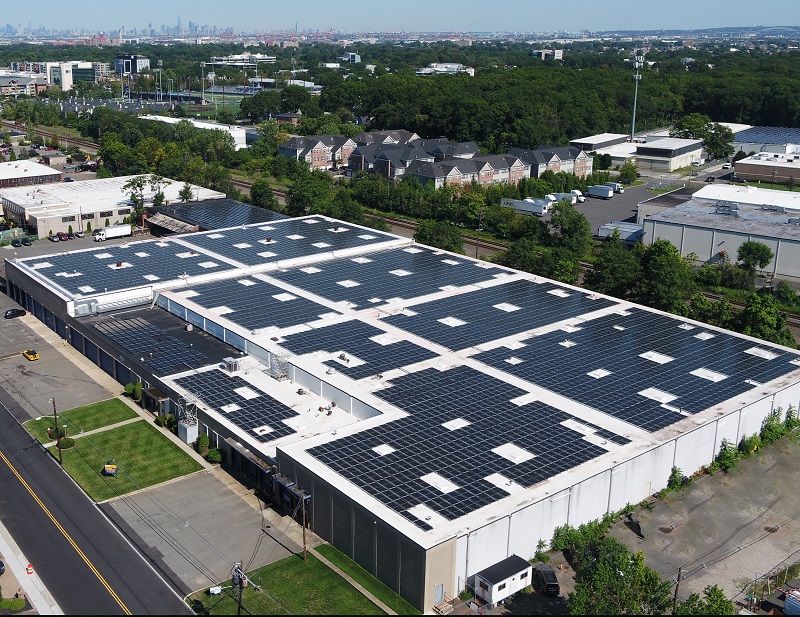
According to BPU, through 2025, New Jersey had 156 completed community solar projects totaling 218 megawatts and serving more than 32,500 New Jersey. Subscribers have received more than $51 million in bill credits, with net savings exceeding $10 million since the start of the pilot program, while an additional 411 community solar projects totaling 705 megawatts are conditionally accepted to the policy.
Part of a clean energy platform that spanned Murphy’s two terms, the program requires that at least 51 percent of the power generated goes to low- and moderate- income customers, providing discounted energy while creating new revenue streams for the businesses involved. In the process, it has renewed the interest of commercial landlords who recall the volatility of past solar incentive programs, which were prone to price fluctuations based on supply and demand.
The BPU also voted this week to expand its Competitive Solar Incentive program while formally launching the Garden State Energy Storage Program, which will support projects that will create an initial 355 megawatts of storage capacity, with additional phases to follow.