Government & Public Policy

From zoning disputes to the federal tax code, public policy affects the commercial real estate sector far more than you may realize. For industry leaders, government and politics demand constant attention.


EDA approves $64 million Aspire award for 210-unit Bayfront project in Jersey City

The first piece of the highly touted Bayfront housing project in Jersey City is moving ahead with the help of a newly approved, $64 million tax credit award under the state’s Aspire program.

CRE leaders hopeful after Murphy signs law to boost viability, eligibility of Aspire projects

Gov. Phil Murphy has signed a law to expand the Aspire tax credit program for developers, in part by allowing projects in New Brunswick, Camden and East Orange to secure larger awards, while taking steps meant to help applicants secure construction financing.

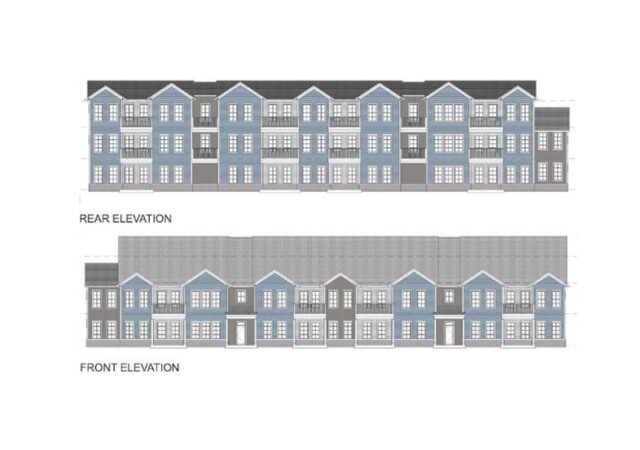
Walters: First renters arrive at new 63-unit affordable housing property in Chatham Twp.

Walters has welcomed the first residents at a new 63-unit, income-restricted multifamily property in Chatham Township after completing the development late last year.

LCOR breaks ground on 386-unit rental tower for sweeping ‘Hoboken Connect’ project

Construction is underway on the new 386-unit apartment tower that will mark a key private-sector component of a landmark, mixed-use project around Hoboken Terminal.

Garcia among newest additions to Connell Foley executive committee

Real estate and land use attorney George Garcia has joined Connell Foley LLP’s executive committee, in one of several new leadership moves announced by the firm.

Towns challenging new affordable housing law detail latest strategy, eyeing Jan. 23 hearing

The coalition of towns seeking to block New Jersey’s new affordable housing law will soon have another day in court, having raised fresh concerns about the process that state officials will use to resolve zoning disputes and about a set of newly released regulations.

Camden officials tease plan for new 500,000 sq. ft. office tower at downtown transit hub

Public officials in Camden have unveiled plans for a new tower that would bring more than 500,000 square feet of office space to the downtown, part of a high-profile effort to revitalize the city’s Walter Rand Transportation Center.

Optimism for CRE in the new year

Overhauling the Energy Master Plan is an opportunity for impacted stakeholders, like you, to help improve what is currently an unrealistic policy document that has done little to accelerate achieving its lofty goals. Perhaps most striking about the current EMP is it lacks an unbiased estimate of what it’ll cost ratepayers, including commercial real estate owners and tenants. Gov. Phil Murphy acknowledged this glaring omission when he announced the 2024 EMP will “seek to better capture economic costs and benefits, as well as ratepayer impacts.”

Real Estate NJ’s 2025 Market Forecast

Commercial real estate leaders have entered 2025 with varying levels of optimism. That’s evident from this year’s Real Estate NJ Market Forecast, where you’ll find everything from caution to confidence about how the sector will perform as it balances strong fundamentals in several key asset classes with new regulatory headwinds, nagging inflation and what seems to be a lingering lack of clarity over when lower interest rates will truly impact the industry.

You can read all about it in our 2025 Market Forecast, which features predictions and insights from some of the state’s leading voices in commercial real estate.

Fully mobilized: Greek, chair of new ‘Circulate NJ’ coalition, sees breadth of membership as key to promoting logistics industry’s impact (and curbing misinformation)

Let there be no confusion: Circulate NJ is not a lobbying group, as David Greek is quick to point out, but a well-organized, diverse coalition that has assembled to promote the vast economic benefits of New Jersey’s logistics sector.

That message is at the heart of the new public awareness campaign that launched shortly before Thanksgiving, led by a membership that includes not just prominent developers but stakeholders ranging from dock workers and truckers to the likes of Amazon. All of which have a vested interest in promoting their collective industry and, in turn, defusing the hostile rhetoric and misinformation that has derailed a growing number of warehouse projects in recent years.