
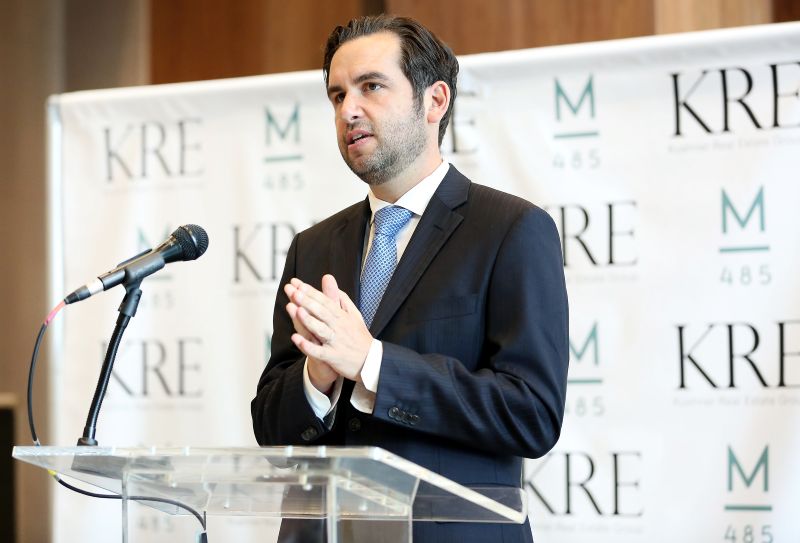
Jersey City Mayor Steven Fulop speaks in 2018 at the ribbon-cutting ceremony for 485 Marin, a 398-unit luxury apartment building that includes 80 affordable units. — File photo/Courtesy: KRE Group
By Joshua Burd
Jersey City Mayor Steven Fulop has been unabashedly pro-growth during his 12 years in office. That’s clear from the city’s ever-changing skyline, but even he concedes that new development has overshadowed efforts to improve housing affordability.
His team points to Jersey City’s inclusionary zoning ordinance adopted in 2021, which requires residential projects with more than 15 units to include 10 or 15 percent set-asides for low- and moderate-income renters, depending on the census tract, if they’re requesting variances or plan amendments. A year later, the Fulop administration unveiled the state’s first affordable housing overlay, which allows for greater density in development that include a lower-income component.
It all reflects a push to increase supply and, among other objectives, compensate for the lack of development in New York City, Fulop said, noting that Jersey City has welcomed nearly twice as many units per capita over the past decade.
“They put a lot of pressure on the entire region, because most of the jobs are in New York City and people want to live close to where they work,” said Fulop who leaves office in mid-January to become CEO and president of the nonprofit Partnership for New York City. “And when you’re not building enough housing, they start venturing into other areas and put pressure on housing.”

A spokeswoman for the outgoing mayor added that, in 2024, Jersey City launched its Consolidated Affordable Housing Portal, “transforming how our most vulnerable residents access housing.” In the first 18 months, the city has already processed well over 10,000 applications, streamlining access and reducing barriers for residents seeking affordable housing.
Fulop also hopes that Bayfront, the 100-acre development that could bring as many 8,000 units to the city’s West Side, with 35 percent reserved as affordable housing, could help ease the backlog as it comes online in phases over the next two decades.
“So I feel like we’ve done a lot in this space,” Fulop said. “It doesn’t get the credit it deserves because of the pressure from New York City … but that’s OK. That’s nature of this.”
Fulop urges Solomon to embrace growth, leave ‘comfort zone’ as Jersey City’s next mayor