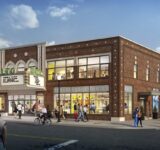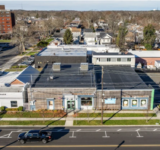
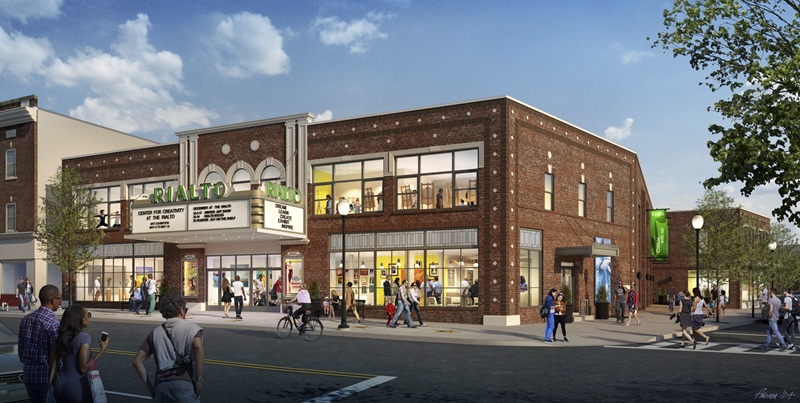
Plans for the Rialto Center for Creativity at 250 East Broad St. in Westfield include an adaptive reuse and a gut renovation of a historic movie house that closed in 2019, repositioning it as the town’s cultural arts hub, offering diverse programming across the visual and performing arts and generating year-round economic activity. — Rendering courtesy: Rialto
By Joshua Burd
Plans to reopen and transform a historic theater in Westfield are moving ahead with the help of a state tax credit program, as is a major update of a well-known cultural venue in Millburn.
According to the New Jersey Economic Development Authority, which pledged the subsidies at its recent boarding meeting, the awards include up to $43.3 million to restore Westfield’s 1920s-era Rialto Theater into a modern cultural hub. The so-called Center for Creativity project at 250 East Broad St. will include an adaptive reuse and a gut renovation of a movie house that closed in 2019, repositioning it as the town’s cultural hub, offering diverse programming across the visual and performing arts and generating year-round economic activity.
In Millburn, the EDA has approved up to $24.8 million in tax credits for the Paper Mill Playhouse’s Front of House project that will reconfigure and expand the entrance and lobby area. Among other updates, the project at 22 Brookside Drive will address longstanding deficiencies in accessibility, circulation and building systems while replacing outdated and undersized restrooms with modern, ADA-compliant facilities.
The authority approved both awards under its Cultural Arts Facilities Expansion or CAFE program, which has supported some of the state’s most recognizable venues since its launch early last year.
“New Jersey’s arts and culture sector is a powerful economic driver, fueling local businesses, creating good-paying jobs and strengthening communities across the state,” said Evan Weiss, the agency’s CEO. “Governor Sherrill is committed to investing in this thriving sector and expanding opportunities for economic growth. Through the CAFE Program, the NJEDA is increasing access to major arts and cultural institutions, which helps attract visitors, support regional economies and ensure that residents from every community can share in the economic and cultural benefits that these organizations provide.”
Plans for the Rialto Theater, spearheaded by Westfield Arts Collective Inc., include a first-floor renovation to create a flexible performing arts and events space with a 450-person capacity, a lobby and ticketing area, a catering kitchen and cafe, dressing rooms and a gallery space, according to a news release. The second floor will encompass four multiuse classrooms to be used for cultural arts education, workshops and rehearsals, as well as admin space and a gallery.
The building will also receive mechanical, geothermal wellfield and HVAC upgrades as well as a new elevator.
“I am deeply grateful to the NJEDA and the CAFE Program for this transformative investment in Westfield,” said Jeremy Berman, the town’s mayor. “The Rialto is one of our community’s most cherished historic landmarks, and its restoration represents an extraordinary opportunity to honor our past while investing in our future. As a vibrant arts and cultural anchor, the Rialto Center for Creativity will strengthen our downtown, support local economic development and create a welcoming destination for residents, visitors, artists and businesses alike.”
Bill Crandall, president of the Rialto board of trustees, added: “The Rialto’s return marks a new chapter for Westfield and the region. Thanks to the NJEDA’s generous commitment to the arts, we’re rebuilding more than a theater; we’re creating a home where creativity thrives and people come together. Now we invite both individuals and institutions to help us cross the finish line. We are so thankful for and appreciative of the donors who are helping us meet our vision.”
The Millburn project, meantime, will create a new two-story lobby at the Paper Mill Playhouse with a box office, concessions and merchandising areas, monumental stairs and elevators, bathrooms and an enlarged donor lounge, the news release said. Plans also call for upgrading the mechanical, electrical and plumbing systems and redesigning main entrances and interior walkways to eliminate accessibility barriers.
The EDA noted the Paper Mill Playhouse has a variety of programs for underserved schools and individuals with disabilities, as well as comprehensive accessibility programming and discounted and reduced cost access.
“The Paper Mill Playhouse is our crown jewel,” Millburn Mayor Frank Saccomandi said. “We’re incredibly lucky to have a theater of this caliber right here in Millburn, and we are thrilled to see the state stepping up to support its future.”
Mike Stotts, the venue’s executive director, also expressed gratitude for the EDA’s support, noting that it will allow the patron experience to “be greatly enhanced and improved for generations to come.
“Greater accessibility and a more thoughtful layout of our public spaces are the driving forces of this project, not to mention the upgrades to mechanical, plumbing, and electrical systems that are severely outdated and inefficient,” he said. “Founded in 1938, Paper Mill Playhouse is the largest producing theatre in New Jersey, serving a statewide audience of over 200,000 people annually, including 40,000 students. Paper Mill’s Next Act Campaign is about ensuring that the legacy of this nationally renowned theatre continues for generations.”
The EDA added that New Jersey’s arts and culture sector contributes billions of dollars in economic activity each year, drives tourism and enhances quality-of-life for state residents. The CAFE Program provides tax credits covering up to 100 percent of eligible project costs, up to $75 million, to build or renovate facilities such as aquariums, historical societies, libraries, galleries and museums, seeking to increase cultural arts activities, attract visitors, boost engagement with the arts in underserved communities and revitalize downtowns.
Morristown’s Mayo PAC poised for $65 million expansion, update with new state tax credit