
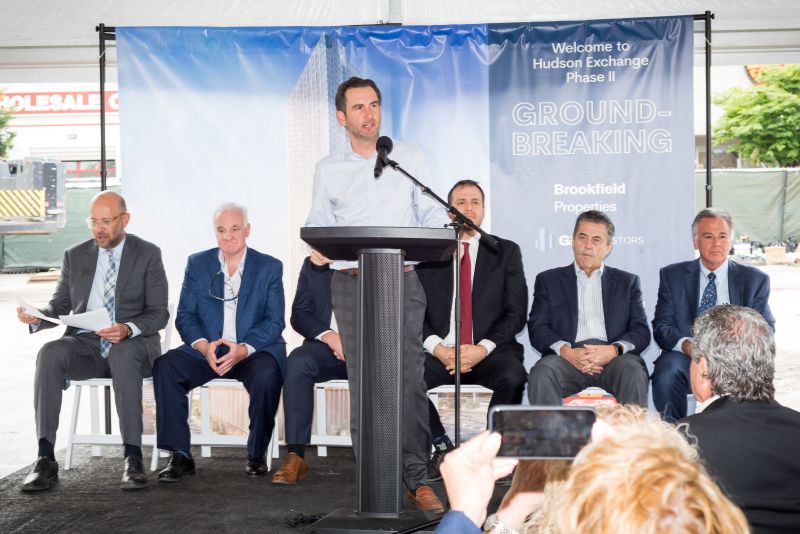
Jersey City Mayor Steven Fulop was on hand in June 2023 to break ground on an 802-unit luxury apartment tower at 420 Marin Blvd., the latest phase of the sweeping redevelopment known as Hudson Exchange — Photo by Peter Dant/Courtesy: Brookfield
By Joshua Burd
Steve Fulop never saw himself as a 20-year mayor, he said recently, citing a belief that “transition in cities is healthy … and it’s healthy to have a new set of eyes and new ideas.”
Not everyone is embracing change, as even he acknowledged, after a campaign by Mayor-elect James Solomon that was decidedly anti-development in the name of improving affordability. That’s stoking uncertainty for some in the private sector as a new administration steps in for the first time in 12 years.
“The business community recognizes that it takes a long time to build a city, but these things are fragile and it takes very short amount of time to tear it down,” said Fulop, who leaves office in January after overseeing a massive development boom while in office. “And that’s where people are always concerned about this sort of thing.”
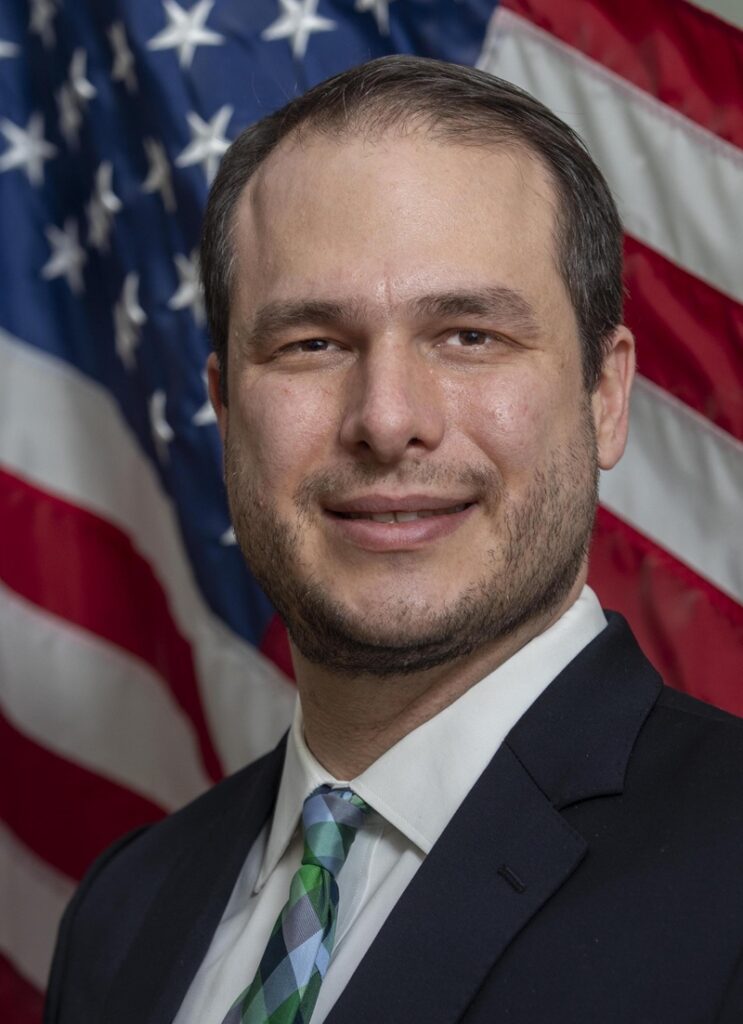
The outgoing mayor, who did not run for a fourth term while seeking the Democratic nomination for governor, called on Solomon to think pragmatically as he moves ahead.
“I think most people would acknowledge that, in order to solve the affordability crisis, you have to have market-rate housing and growth,” Fulop said. “And even at times, despite what the NIMBYs say — the ‘not in my backyard’ folks — you’ve got to push through that. If you’re going to placate everybody as mayor and try to make everybody happy, you’re really not going be successful with accomplishments. Because the reality is that, if you move a city forward, at times you’ve got to show leadership and venture outside of that comfort zone — and hopefully lead people to a place of why your vision, your goal, is positive for them long-term.”
Fulop was steadfast that Solomon will need to govern differently than he campaigned when it comes to development. For one thing, he said, requiring that projects have 20 percent affordable housing and that they’re built by union labor is not possible without tax abatements and other tools, the kind that Solomon has attacked as both a councilman and a candidate.
It all “comes down to math,” Fulop said, adding: “There are other markets that people can invest in, and if it’s not a pro-growth environment where you have a partner that’s reasonable, they’re going to go elsewhere.”
“We’ll see what he changes and what the new council changes,” he added. “But the hope is that they continue a pro-growth agenda.
“The good thing is that James is a smart guy and, in my experience, he’s reasonable. And he obviously cares a lot about the city. So the hope is that he recognizes that the campaign was one phase of this thing. He’s gotten elected. Now you’ve got to deliver some results, and not everything you say in the campaign, unfortunately, is a reality of what you can achieve.”