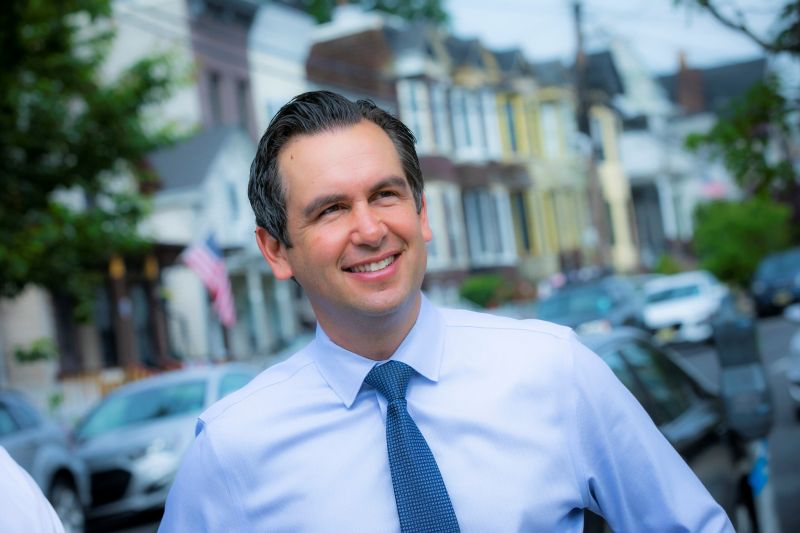
Steven Fulop will step down as Jersey City’s mayor in January 2026. — Courtesy photo
By Joshua Burd
By his own admission, Steve Fulop was skeptical of the development community when he joined the Jersey City Council in 2005.
His view today, as he winds down his third term as mayor, is indisputably different.
“In 2013, I started to think more about the fact that a healthy city is a growing city,” Fulop said, alluding to his first year as mayor after having built relationships on the council, in the private sector and elsewhere as part of a “good, on-the-ground education” on how cities grow.
“We wanted to be recognized as a world class city with arts, culture and nightlife — and development was key to that.”
The shift was pivotal for a municipality that, since Fulop took office, has become even more firmly entrenched as the epicenter of commercial real estate investment in New Jersey, most notably in the multifamily space. Developers in Jersey City have completed more than 45,000 units of market-rate and affordable housing in the last 10 years, according to the mayor’s office, while the city has tens of thousands of additional units under construction or approved for future projects.
Fulop, who leaves office on Jan. 14, has famously leveraged that demand to expand development beyond the city’s downtown and waterfront neighborhoods. He’s also taken major steps to boost access to affordable housing, as his team notes, while spearheading high-profile, public-sector investments that supported major social, cultural and quality-of-life initiatives.

The decisions weren’t universally popular. Fulop knows that well, but his conviction is as strong as ever that Jersey City is better off after 12 years of pro-growth policies.
“I realized that even those loud voices on social media don’t reflect the larger community,” he said, especially after winning three elections. “If you were to look at the Facebook crowd during those campaigns, you’d think I was going to lose by huge numbers.
“And I say that because you’ve got to keep perspective that it’s a complicated city, a big city, and most people appreciate growth.”
He also acknowledged that the city, like the rest of the region, still faces a significant housing shortage. That continues to put pressure on rents, he said, especially given the lack of development in New York City over the past decade.
“I feel like we’ve done a lot, and I feel like you could always do more,” said Fulop, who did not seek re-election this year amid an unsuccessful run for governor and will be succeeded by Councilman James Solomon. “I think there’s definitely an affordability crisis throughout New Jersey — there’s no question about that. There’s an affordability crisis in this entire region. And it’s not only about housing. Wages haven’t been increased at the same rate as costs. That’s at the core of the problem.”
READ MORE: Steps taken: Fulop proud of record on affordability, but knows there’s more to be done in Jersey City
Fulop is set to become CEO and president of the Partnership for New York City, the influential nonprofit business advocacy group, replacing longtime leader Kathryn S. Wylde under a move announced in early October. That follows two decades of public service in Jersey City that began in his late 20s, when he first won a council seat after an upstart, grassroots campaign for a post he would hold for eight years.
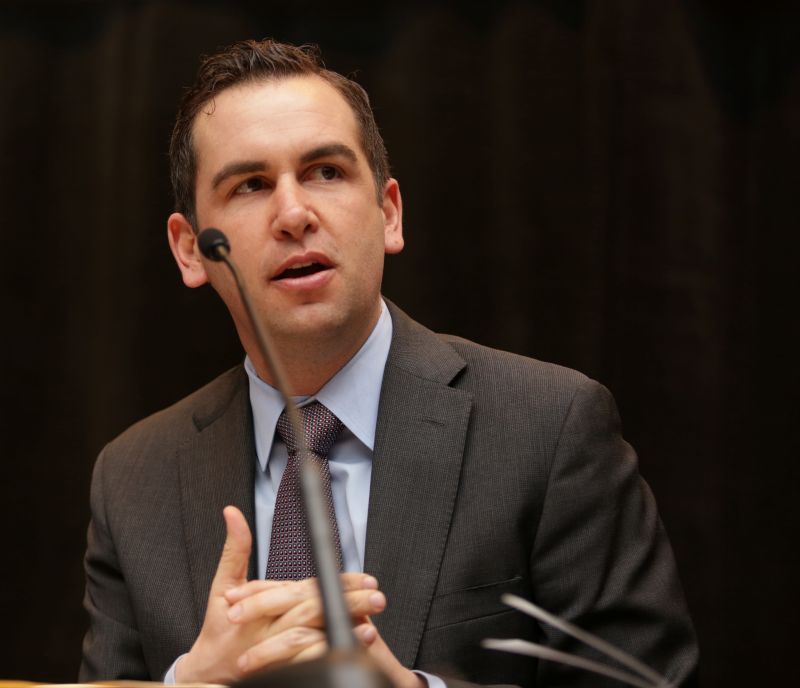
His time on the council and subsequent three terms as mayor focused largely on progressive causes, from ensuring paid sick leave for workers to major reforms to the city’s police department. He’s also had political highs and lows, including this year’s loss in the Democratic primary for governor. But Fulop is widely associated with Jersey City’s broad-based economic development boom.
Tax break overhaul
It wasn’t long after Fulop was elected mayor in May 2013 that he set out to “clarify how we’re going to approach development and try to eliminate some of the politics of it.” That meant revamping Jersey City’s tax abatement program to spur development in more overlooked areas such as Journal Square, Bergen-Lafayette and the West Side — creating a tiered system based on census tracts while cutting subsidies in the booming downtown and waterfront neighborhoods. The policy also created new requirements and incentives for incorporating affordable housing, among other provisions.
“People put capital to work because there was certainty around it, and we hired professional people,” said Fulop, a former Goldman Sachs trader who famously enlisted in the U.S. Marines after Sept. 11. “I was very pro-growth at the time.”
“When we started, it wasn’t healthy because the tax abatements were given out so easily that they were by right, almost,” he added. “So if you’re buying a property or selling a property, the tax abatement was factored into the land sale, so who benefited was the seller, and the buyer accepted that because they thought they were getting a fair price with certain incentives.
“But who didn’t see the benefit, ultimately, was the taxpayer, the resident of Jersey City, because what should be an incentive to get more back was traded away in the land sale by two people that expected to get it from the city. So recalibrating that was really important to us.”
The policy’s impact has been on display over the past decade — most notably in Journal Square, where a tax abatement helped spark KRE Group’s three-phase, 1,840-unit Journal Squared project. The development served as proof of concept for the historic but long-neglected neighborhood around the Journal Square PATH station, setting off a development boom that includes thousands of completed and under-construction units by the likes of Kushner, Namdar Group, Panepinto Properties, Ironstate Development and many others.

Fulop said “there’s probably no better representation” than Journal Square of an area that benefits from embracing a pro-growth agenda with the support of upzoning and incentives, but “it started with clarity around embracing development and certainty for capital” by way of the tax abatement program. That provided a push for developers and investors that, at the time, “were speculating and acquiring land but sitting on it.”
“Nobody wanted to be the first one to do a big billion-dollar project,” he said. “So how you get somebody to do that is by creating an environment where they feel like they have a trusted partner at City Hall … that understands that there’s a billion dollars at risk here and we have a shared interest in making this project successful.”
The development boom has coincided with several major public or city-led investments in Journal Square. Chief among them is the $130 million restoration of the historic Lowes Theater, which is slated for completion in 2026, and plans for the new 3.4-acre Courthouse Park on Pavonia Avenue.
Fulop also referenced his long-sought plan to build a new museum in the neighborhood — namely, the proposed satellite location of the acclaimed Centre Pompidou in Paris. That project’s future is uncertain due to funding shortfalls and political pushback, but the mayor said he was no less proud of the sweeping private and public investments in Journal Square and elsewhere, including a multiphase, $200 million municipal complex in Bergen-Lafayette.
“All of that is a byproduct of our economic development team,” Fulop said. He credited Marcos Vigil, former deputy mayor and director of housing, economic development and commerce, and Annisia Cialone, who took over the latter role in 2018 after serving as city planning director. He also repeatedly cited cooperation with the city council.
Fulop leaves office with development booming in several other districts, including Bergen-Lafayette and the West Side, amid several high-profile projects that the city has championed or invested in. Look no further than Bayfront, the 100-acre former Honeywell Corp. property that Jersey City purchased in 2018 and is slated for 8,000 units with an unprecedented 35 percent affordable housing component. The mayor spoke in mid-December after the city had just closed on its sale of the project’s first parcel, where plans call for 210 rentals, paving the way for vertical construction to begin in the spring.
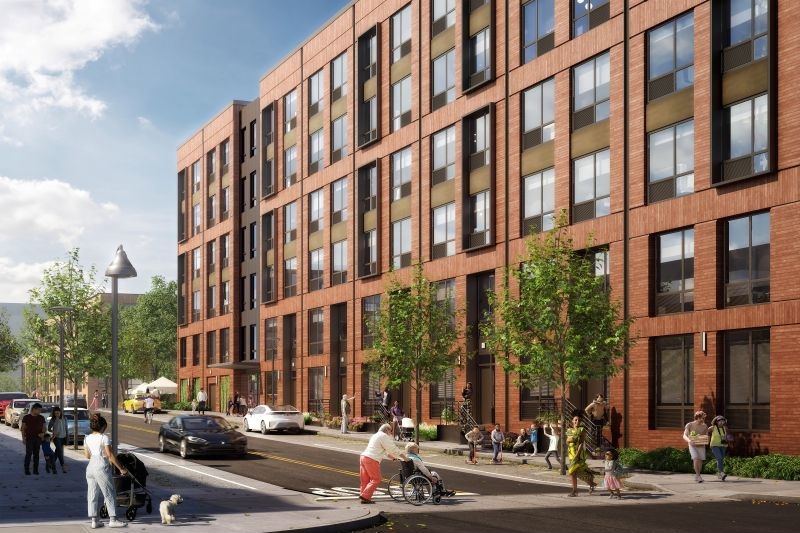
“I feel that Bayfront is going to be one of the biggest success stories,” he said. “The whole West Side is changing … but (with) Bayfront, the next mayor will run with that for four years, eight years or twelve years, however long James is there. And I think it’s going to be one of the most significant things that we did when you look back, the same way Paul Jordan (the city’s mayor in the 1970s) … is given credit for all the redevelopment plans that started Newport.”
READ MORE: Fulop urges Solomon to embrace growth, leave ‘comfort zone’ as Jersey City’s next mayor
The final stretch
It wasn’t the only item on Fulop’s final checklist. Construction could soon begin on a new high school adjacent to the Liberty Science Center — a previously stalled but vital piece of the planned $450 million campus known as SciTech Scity — after a multiyear effort to redesign and “value engineer” the project to account for rising costs.
His team is also marking progress on the so-called Sixth Street Embankment, the site of an elevated former freight line downtown, where city leaders and advocates hope to build a distinctive public park akin to Manhattan’s High Line. The plan, stalled by more than 20 years of litigation over Conrail’s sale of the land to a developer, is finally advancing after a settlement agreement approved by the council in mid-November. That reportedly includes approval for a 40-story, 604-acre residential tower on the easternmost portion of the site, while the balance will have some five acres of open space.
“I think I’ve been putting my foot on the gas with the Embankment, with SciTech Scity and Bayfront,” Fulop acknowledged. “I’ve been trying to make sure that the things that I can control that I started are getting closed out.”
Looking back, he said he “never really set an objective” when it came to housing production during his time in office. He believed “we would be good on housing and good on development” — largely by coupling ambitious policies with a strong market — “but I didn’t have an idea of how well it would have worked, if I’m being fair about it.”
He also conceded that “if you stay in office long enough, you’re going to have ups and downs.” The city “had a good run for a couple years” because of low interest rates, but COVID-19 and the Federal Reserve’s subsequent tightening cycle created challenges.

The results are evident after 12 years, but they were also on display in real time. Fulop, who has likely been to hundreds of groundbreakings or ribbon-cutting ceremonies, said it was always “a good sign that people are investing in the city at the rate that they are, but it does become a blur sometimes.”
That’s not to say that he ever took them for granted or became jaded by the scale of the buildings. He said the view from a rooftop amenity deck, where ribbon-cuttings are often held, never gets old. That’s especially true for buildings in places like Bergen-Lafayette — where residents can see not only Manhattan but downtown Jersey City and Liberty State Park — or Journal Square, which is more than 90 feet above sea level and thus significantly higher than the waterfront, providing unmatched views of the region.
“Ribbon-cuttings in those areas, to me, are different because you don’t have such an appreciation until you’re actually up there of what those things look like,” he said. “Jersey City is just blessed to be in the proximity of that skyline, the Statue of Liberty and the type of housing stock that we have with older homes as well as newer homes. It’s just an unbelievable place from a city urban development standpoint.”
He also points to the views for anyone driving in on the New Jersey Turnpike’s Newark Bay Extension.
“I look at how the Jersey City skyline blends in with the New York skyline and I take tremendous pride in that,” Fulop said. “And I’m excited by the fact that we’ve been able to grow the city like that and that it has such a skyline now that it rivals any city in the country.”
Fulop urges Solomon to embrace growth, leave ‘comfort zone’ as Jersey City’s next mayor